

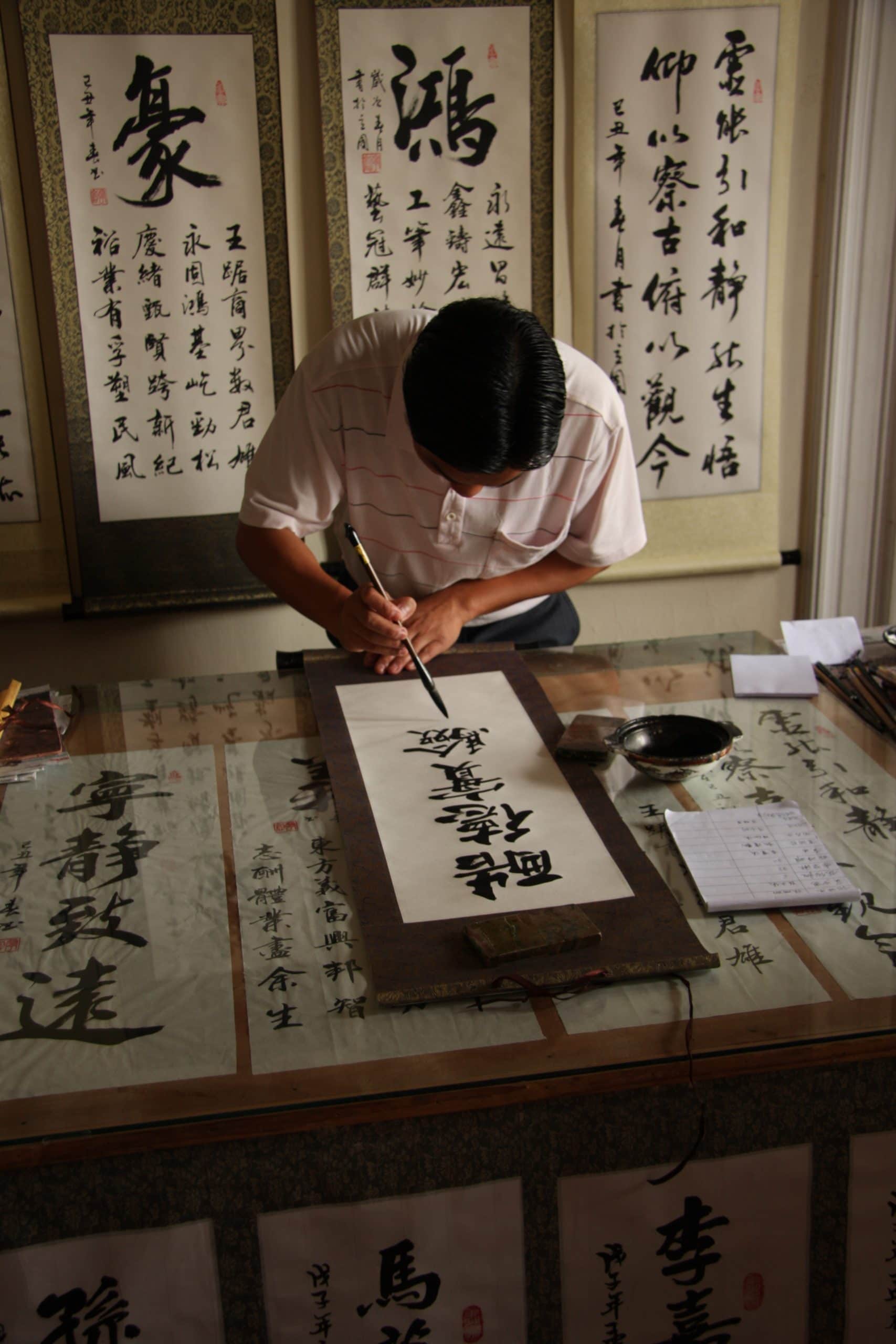
Modern Calligraphy vs. Traditional Calligraphy: Which Should You Learn?
Table of Contents
You’ve seen the flowing, expressive scripts on wedding invitations, Instagram posts, and hand-lettered prints — and you want to learn. But as soon as you start researching, you hit a wall: modern calligraphy vs traditional calligraphy. Are they really that different? Which one should a beginner start with?
This guide breaks down both styles — covering their tools, techniques, difficulty levels, and who each one is best suited for — so you can make a confident choice and actually get started.
What Is Traditional Calligraphy?
Traditional calligraphy refers to the systematic letterforms developed over centuries — styles like Copperplate, Spencerian, Italic, Gothic (Blackletter), and Uncial. Each style follows a strict set of rules: specific letter proportions, consistent slant angles, defined pen holds, and precise thick-to-thin stroke relationships.
Traditional calligraphy is prescriptive by nature. There is a right way and a wrong way. The appeal lies in the mastery of a centuries-old craft.
Traditional Calligraphy Tools
Traditional calligraphy is built around the dip pen: a pen holder fitted with an interchangeable nib, dipped into bottled ink. Different nibs produce different line weights and styles.
Dip Pen & Ink Set — the essential starting kit for any traditional calligraphy style:
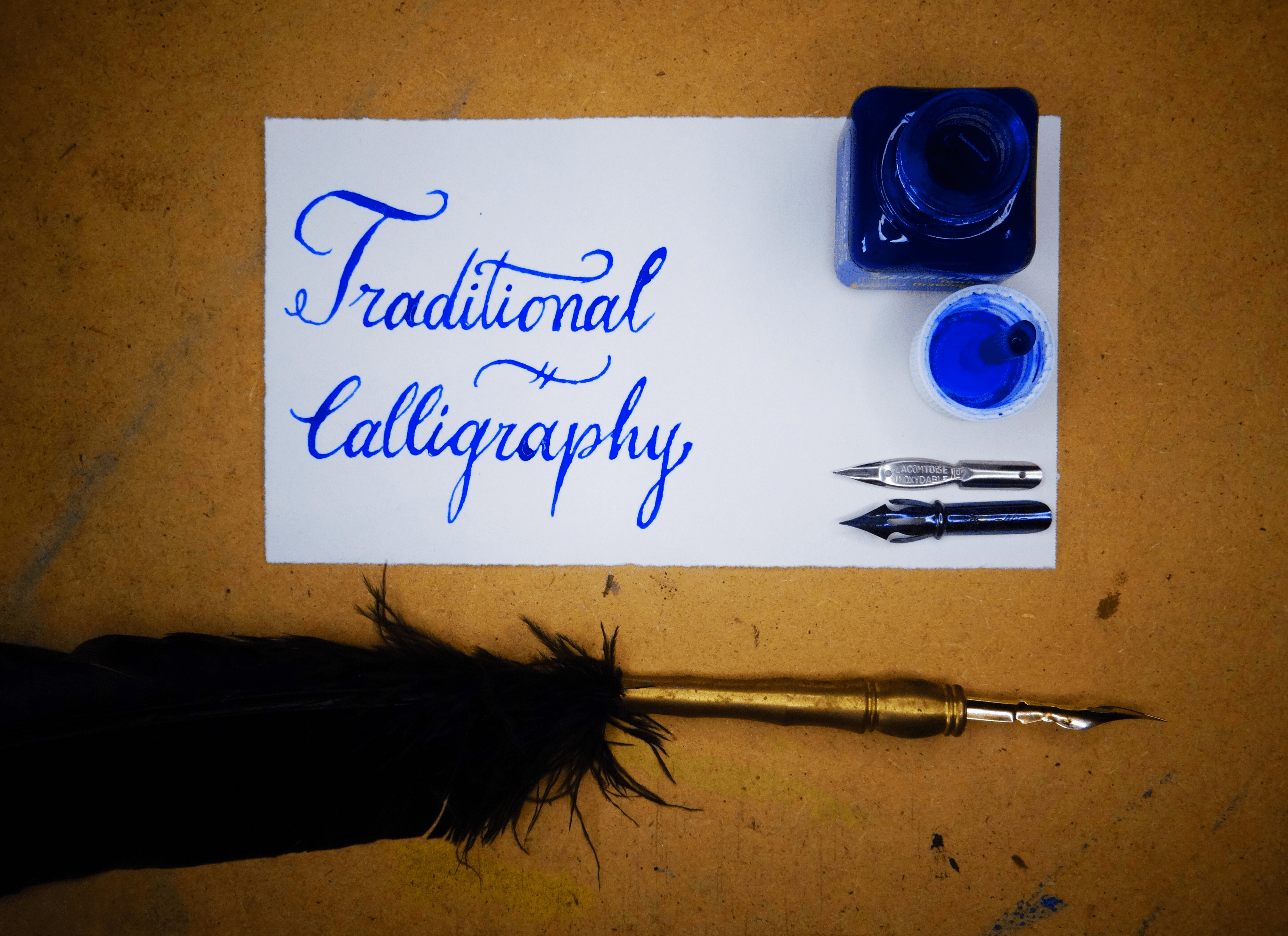
Nikko G Calligraphy Nib — the most forgiving entry-level pointed pen nib. Firm enough for beginners, flexible enough for expressive strokes:
Other tools you’ll need: a pen holder (oblique or straight), calligraphy ink, and smooth practice paper. A slanted desk or pad helps maintain the correct letterform angles.
What Is Modern Calligraphy?
Modern calligraphy is a looser, more personal interpretation of letterform art. It borrows the basic concept of thick downstrokes and thin upstrokes from pointed pen calligraphy — but then breaks all the other rules.
Modern calligraphy celebrates individual style. Letters can bounce, lean, loop, or sprawl. There’s no official “correct” form. It emerged from the broader hand-lettering revival of the 2010s and has become the dominant calligraphy style on social media.
If you’ve ever wondered about the difference between calligraphy and hand lettering, modern calligraphy sits right at the intersection of both worlds — technically calligraphy in its thick/thin approach, but creatively free like hand lettering.
Modern Calligraphy Tools
The biggest advantage of modern calligraphy: you don’t need a dip pen. Brush pens replace the dip pen entirely, making the process cleaner, more portable, and far more beginner-friendly.
Tombow Dual Brush Pens — the most popular modern calligraphy brush pens for beginners. The flexible brush tip responds naturally to pressure, creating thick/thin variation without special technique:

Pentel Touch Sign Brush Pens — a firmer tip that gives beginners more control as they develop pressure sensitivity. A great companion to the Tombow set:

For a full breakdown of the best modern calligraphy markers and brush pens on the market, see our best calligraphy markers for beginners guide — it covers Tombow, Pentel, Sakura, Staedtler, and more with side-by-side comparisons.
Modern calligraphy also opens the door to watercolor calligraphy — combining brush pens or a water brush with watercolor paints for gorgeous gradient effects. If you want to explore this creative direction, read our guide on 6 ways to pair calligraphy with watercolor.
Key Differences at a Glance
| Traditional Calligraphy | Modern Calligraphy | |
|---|---|---|
| Tools | Dip pen, nibs, bottled ink | Brush pens, markers, watercolors |
| Rules | Strict — specific forms and angles | Flexible — personal style encouraged |
| Learning curve | Steeper — requires pen control | Gentler — more forgiving tools |
| Setup | Ink, nibs, pen holder, practice paper | Just a brush pen and paper |
| Portability | Limited — ink can spill | Highly portable |
| Style freedom | Low — follow the system | High — make it your own |
| Best for | Formal documents, wedding calligraphy | Personal projects, social media, creative expression |
Difficulty Level: Which Is Harder?
Traditional calligraphy is harder — full stop. Here’s why:
- Dip pens are finicky. Ink viscosity, nib pressure, and paper texture all affect every stroke.
- The letterforms are fixed. You can’t “wing it” with Copperplate — every letter has a defined structure to memorize and reproduce.
- Maintaining consistent slant, spacing, and letter height requires deep muscle memory.
- The nib can catch on paper, splatter ink, or produce scratchy results if held at the wrong angle.
Modern calligraphy is still a skill — it takes real practice to develop smooth pressure transitions and a distinctive personal style. But the tools are more forgiving, and the rules are yours to set.
Think of traditional calligraphy like learning classical piano, and modern calligraphy like learning chords on an acoustic guitar. Both are rewarding; one takes longer to get started.
Which Style Should You Learn First?
Start with modern calligraphy — unless you have a specific reason to go traditional.
Modern calligraphy’s lower barrier means you’ll see satisfying results faster. That early momentum keeps you motivated through the trickier parts of learning. Brush pens are also cheaper to start with than a full dip pen + ink + nib setup.
If your goal is:
- Wedding invitations or formal envelopes: Learn traditional (Copperplate or Spencerian).
- Instagram content, quotes, gifts, or personal joy: Start with modern.
- Mastering a centuries-old craft: Go traditional from day one.
- Quick results and creative freedom: Start with modern, add traditional later.
When you’re ready to get started, our complete calligraphy alphabet guide for beginners walks you through the full alphabet using modern brush pen technique — with stroke-by-stroke instructions for each letter.
And if you want to build foundational drawing skills that support your calligraphy development — things like line weight, proportion, and spatial awareness — ImprovedDrawing.com has excellent guides for developing hand control and mark-making confidence that transfer directly to calligraphy practice.
Can You Learn Both?
Absolutely — and many calligraphers do.
Modern calligraphy is often a gateway to traditional styles. Once you’ve trained your hand to respond to pressure with a brush pen, picking up a dip pen feels less foreign. You already understand thick-and-thin; now you’re just learning a new tool and a stricter set of rules.
Many calligraphers practice both styles and let them inform each other. Traditional calligraphy sharpens your discipline and letter knowledge. Modern calligraphy keeps things playful and expressive.
To accelerate your brush calligraphy specifically, check out our 9 ways to improve your brush calligraphy — a practical guide to fixing the most common beginner mistakes and building the muscle memory that makes both styles easier.
Final Verdict
The difference between calligraphy styles comes down to structure vs. freedom, and tool complexity vs. accessibility.
- Modern calligraphy is the best entry point for most people. Lower cost, faster results, more flexibility.
- Traditional calligraphy is deeply rewarding if you want to master a specific style or produce formal work.
- Both are worth learning — and one makes the other easier.
Pick up a set of brush pens, work through the alphabet, and you’ll know within a week whether you want to keep going — or dive deeper into the world of dip pens and ink.
Leave a Reply