

Table of Contents
If you’ve ever admired beautifully written text — on a wedding invitation, a handmade quote print, or an Instagram post — you may have wondered: is that calligraphy or hand lettering? These two art forms are often confused, and it’s easy to see why. Both result in gorgeous letterwork. But the process, tools, and mindset behind each are quite different.
Let’s break down exactly what makes each unique — and help you figure out which one is right for you to learn first.
What Is Calligraphy?
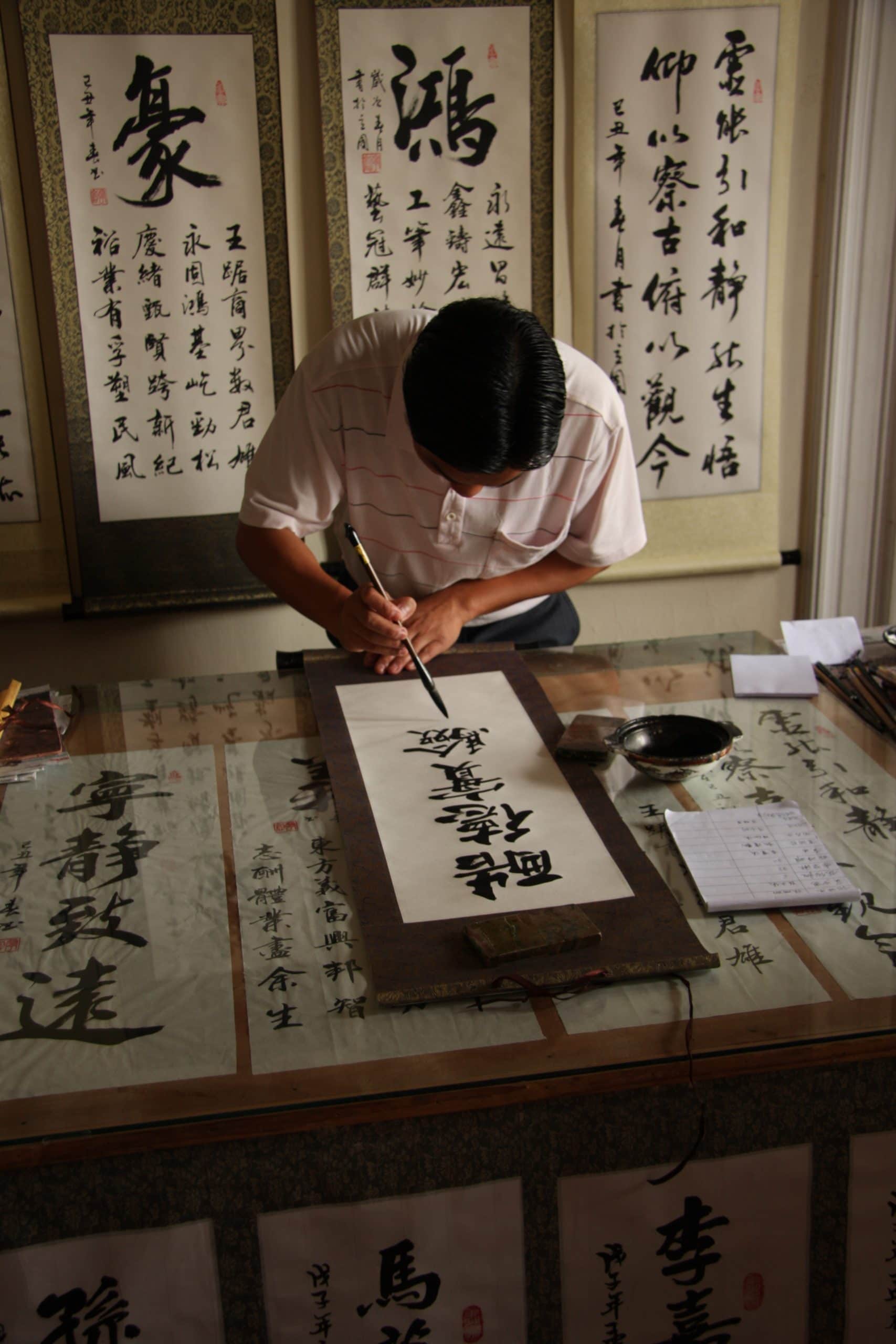
Calligraphy is the art of writing letters in a flowing, expressive style using specific techniques and tools. The word itself comes from the Greek kallos (beauty) and graphe (writing). It’s one of the oldest visual art forms in the world, with deep roots in East Asian, Islamic, and Western traditions spanning thousands of years.
The key to calligraphy is consistent, rule-based technique. Each letterform follows a specific set of strokes, performed in a particular order. In pointed pen calligraphy — like Copperplate or Spencerian script — thick strokes happen on the downstroke and thin strokes happen on the upstroke, controlled by applying and releasing pressure on the nib. In broad-edge calligraphy, the width of the stroke is determined by the angle of the pen.
Traditional calligraphy tools include:
- Dip pens with pointed or broad-edge nibs
- Calligraphy brushes
- Ink (India ink, walnut ink, or sumi ink)
- Guidelines and ruled practice sheets
- Specialty papers with smooth surfaces
Calligraphy is fundamentally about writing. You’re producing letterforms in real time, stroke by stroke, with muscle memory and repetitive practice at the core of the skill.
What Is Hand Lettering?
Hand lettering is the art of illustrating letters rather than writing them. Instead of following strict stroke orders and technical rules, a hand lettering artist designs and draws each letterform — often sketching it in pencil first, refining the shapes, and then inking over multiple passes.
Think of a hand lettering artist the same way you’d think of an illustrator who draws a character. The end result might look like handwriting, but it’s really a carefully designed visual composition. A single word in hand lettering might take five minutes to sketch and twenty minutes to refine.
Common hand lettering tools include:
- Pencils (for sketching and refining shapes)
- Micron pens or fineliners
- Brush pens
- Procreate or other digital illustration apps
- Lightboxes (for tracing and cleanup)
Because it’s illustrative by nature, hand lettering gives you enormous creative freedom. You can stretch, curve, overlap, embellish, and layer letterforms in ways that aren’t possible with traditional calligraphy. This makes it especially popular for logo design, quote art, and custom typography.
Calligraphy vs. Hand Lettering: A Side-by-Side Comparison
| Feature | Calligraphy | Hand Lettering |
|---|---|---|
| Core process | Writing (continuous strokes) | Drawing/illustrating letters |
| Technique | Strict rules and stroke order | Freeform and illustrative |
| Key tools | Dip pens, ink, calligraphy brushes | Pencils, brush pens, digital apps |
| Learning curve | Higher — requires muscle memory | More forgiving for beginners |
| Style flexibility | Limited by script tradition | Almost unlimited |
| Best for | Formal scripts, envelopes, traditional work | Logos, quotes, creative compositions |
| Results | Consistent, elegant letterforms | Custom, expressive designs |
How Are They Related?
Despite their differences, calligraphy and hand lettering are closely connected — and many artists practice both. Understanding calligraphy gives hand letterers a solid foundation in letterform proportions, stroke contrast, and rhythm. And calligraphers who study hand lettering often develop a freer, more expressive style in their work.
Both art forms belong to the broader world of lettering — where written language becomes a visual art form. Curious about the full range of styles that fall under the lettering umbrella? Our guide to Different Lettering Types: Styles of Lettering covers everything from serif lettering to blackletter, bounce lettering, and beyond.
Which Should I Learn First?
This is the question every beginner asks — and the honest answer is: it depends on what excites you most.
Choose calligraphy if you:
- Want to write beautiful formal scripts like Copperplate or Spencerian
- Love the meditative, rhythmic quality of traditional penmanship
- Are interested in addressing envelopes, wedding stationery, or ceremonial pieces
- Enjoy learning with clear rules and structured practice drills
Choose hand lettering if you:
- Want creative freedom and the ability to invent your own styles
- Are interested in design, branding, logo lettering, or quote art
- Prefer working digitally or with brush pens
- Learn better by experimenting than by drilling techniques
If you’re completely new to both, many artists recommend starting with brush lettering — it uses brush pens rather than a dip pen, and it bridges the gap between calligraphy and hand lettering beautifully. It’s more forgiving than traditional calligraphy while still teaching you about stroke contrast and letterform flow. Our post on 9 Ways to Improve Your Brush Calligraphy is a fantastic place to start.
And here’s the truth: you don’t have to choose just one. Learning both will make you a stronger lettering artist overall. Start with whatever excites you most right now, and let your curiosity guide you toward the other.
The Bottom Line
Calligraphy is the ancient, technique-driven art of writing beautiful letters. Hand lettering is the modern, illustrative art of drawing them. Both are deeply rewarding. Both take practice. And both can produce absolutely stunning results.
If you’re looking to build your pencil control alongside your lettering journey, Improved Drawing’s guide to the best drawing pencils for beginners is a great companion resource — the deliberate hand control that makes great calligraphy also translates into stronger sketching skills.
Whether you pick up a dip pen or a pencil, the most important thing is to start. The Lettering League community is here to support you every step of the way — no matter which path you choose.
Leave a Reply